
- In Mold
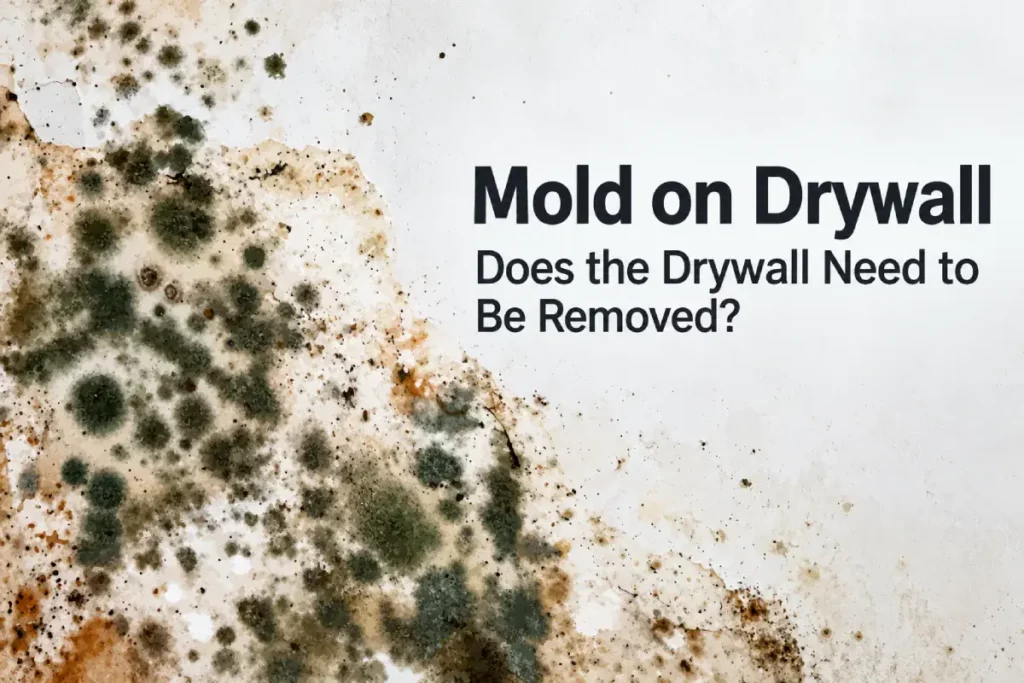
Mold on Drywall: Does the Drywall Need to Be Removed?
Do you notice a dark stain near the bottom of a wall after a leak, or a musty smell that won’t go away even though the surface looks mostly fine? The problem isn’t cleaning the mold, it’s determining whether you are dealing with mold on drywall, hidden mold behind drywall, or deeper mold growth caused by water damage inside the wall.
The answer will depend on the extent of the moisture and if the mold has gone beyond the surface. Drywall is porous, so mold can grow inside or behind the drywall before it even becomes visible.
Why Mold on Drywall Can Be a Bigger Problem Than It Looks
Drywall is very susceptible to mold growth after water damage, leaks, flooding or humidity problems.
Once moisture reaches the inner layers, mold can develop inside and outside of the drywall, and can spread into insulation and framing inside wall cavities.
A small visible patch can sometimes hide a much larger mold problem, especially if the moisture source has not been fixed or been happening for a long time.
Is Mold on Drywall Dangerous?
Mold on drywall can affect indoor air quality and contribute to poor indoor environmental conditions. As the mold grows, spores can circulate through the air.
Exposure to household mold may cause:
- Nasal congestion
- Coughing or throat irritation
- Eye irritation
- Skin irritation
- Wheezing or breathing discomfort
People with asthma or allergies may be more sensitive to mold exposure, and the level of risk depends on the amount of mold present, how long it has been growing, and whether or not it was being disturbed.
When Drywall Mold Needs to Be Removed
Drywall mold removal is typically necessary when the mold growth goes beyond the surface or when there is significant moisture damage.
Removal is more likely when:
- Visible black mold on drywall appears
- Mold has penetrated into the drywall
- Drywall feels soft or is damaged
- There is suspected hidden mold behind drywall
- The moisture source is ongoing
- Mold spreads beyond a small surface area
If mold has penetrated porous materials, drywall removal will most likely be part of the mold remediation process.
Can Mold on Drywall Be Cleaned Instead?
In some situations, when the surface mold is light, it can be treated without removing the drywall, particularly when the drywall is still dry and structurally sound.
However, hidden mold behind drywall cannot be removed through surface cleaning alone.
Cleaning without addressing the source of the moisture may only treat the visible problem, not the underlying mold inside the wall. The important part is to determine if the mold is just on the surface.
Signs of Hidden Mold Behind Drywall
Even if there is no visible mold, there are signs that the mold may be hidden behind the drywall. Here are some indicators that you may have hidden mold:
- There is a musty or persistent odour
- Water stains or discoloration on the drywall
- The paint is starting to bubble or peel
- The drywall is soft or warped
- You had a leak or flood in your home
- The baseboards and corners are also damp
- You have continuous moisture problems indoors
These do not automatically confirm that mold is present, but they can indicate that there is a deeper problem inside the wall and that a professional mold inspection may be needed.
How Professionals Detect Mold Behind Drywall
A professional mold inspection can help determine whether mold is limited to the surface or hidden behind the drywall.
Tools and methods may include:
- Air testing inside and outside the home
- Moisture meters for detecting damp materials
- Thermal imaging for hidden moisture
- Professional examination of the drywall
- Controlled openings to inspect behind the wall
This helps determine whether drywall mold removal or more extensive mold remediation is required.
What Happens After Moldy Drywall Is Removed?
Once the affected drywall has been removed, the moisture source needs to be addressed to reduce the chance of the mold returning.
The restoration process for mold can include:
- Complete removal of contaminated drywall
- Treatment of the framing and surrounding surfaces
- Replacement of insulation if required
- Drying and dehumidifying the area
- Installation of new drywall
- Finishing and repainting the walls
- Mold proofing with a professional treatment
Without fixing the source of the moisture issue, recurring drywall mold problems will probably return.
Conclusion
While some mold on drywall can be cleaned at the surface level, the porous material of drywall is much harder to clean once the mold has gone beneath the surface.
When dealing with black mold, mold behind walls, or mold caused by significant water damage, drywall removal and mold remediation will probably be necessary.
A professional inspection can help determine whether you are dealing with surface contamination or a deeper mold problem inside the wall.
Not Sure How Far the Mold Has Spread?
If you have mold on drywall, MoldCare can inspect the affected area and determine if it needs to be taken care of.
We provide mold inspections to identify mold issues, either visible or in the air. If you have signs of contamination on your walls or suspect that you have mold in your home, an inspection can help confirm the problem.
Contact MoldCare to schedule a professional mold inspection and find out what is really happening behind the drywall.


